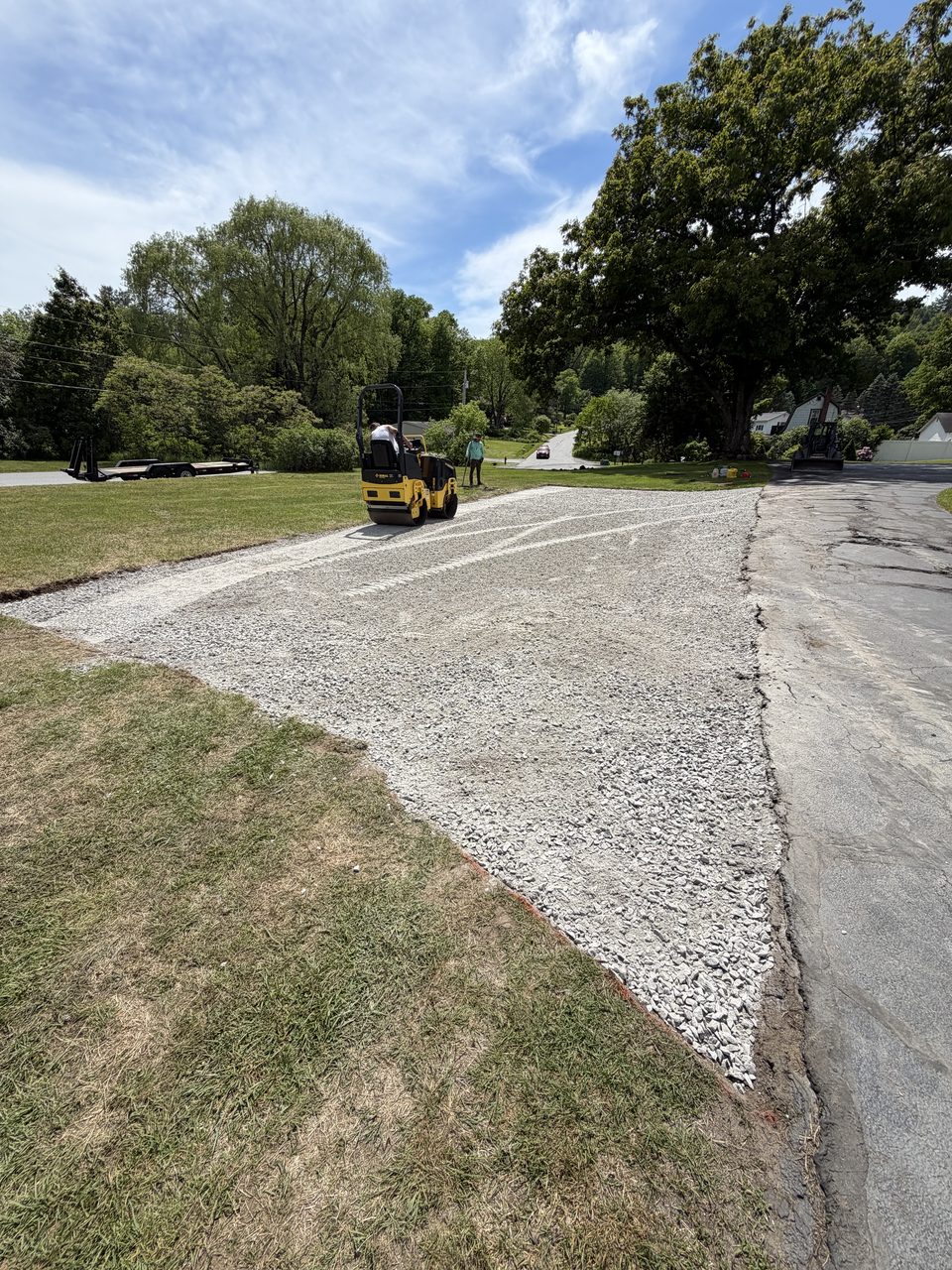
Gravel Driveways & Grading
New gravel driveways, regrading, and repairs for ruts, potholes, and washouts — built to drain properly now and ready to become a solid base if you pave later.
Plenty of New Hampshire homes are on gravel driveways, especially long rural ones where paving the whole length isn't in the budget yet. A good gravel driveway can work well for years, but only if it's built with the right material and shaped so water runs off it instead of down the middle.
Most gravel driveway problems — ruts, potholes, washboarding, washouts after heavy rain, and soft spots in mud season — come back to drainage and material. We fix the cause, not just the symptom, and we build it so the same gravel can serve as the base if you decide to pave down the road.
What's included
- New gravel driveways built on a prepared sub-grade
- Regrading and re-shaping existing gravel driveways
- Fresh crushed gravel brought in and compacted
- Repair of ruts, potholes, washboarding, and soft spots
- Washout repair and drainage fixes on sloped driveways
- Crowning or pitching so water runs off to the sides
- Base preparation for future asphalt paving
- Free on-site estimate and a clear written quote
Gravel now, asphalt later
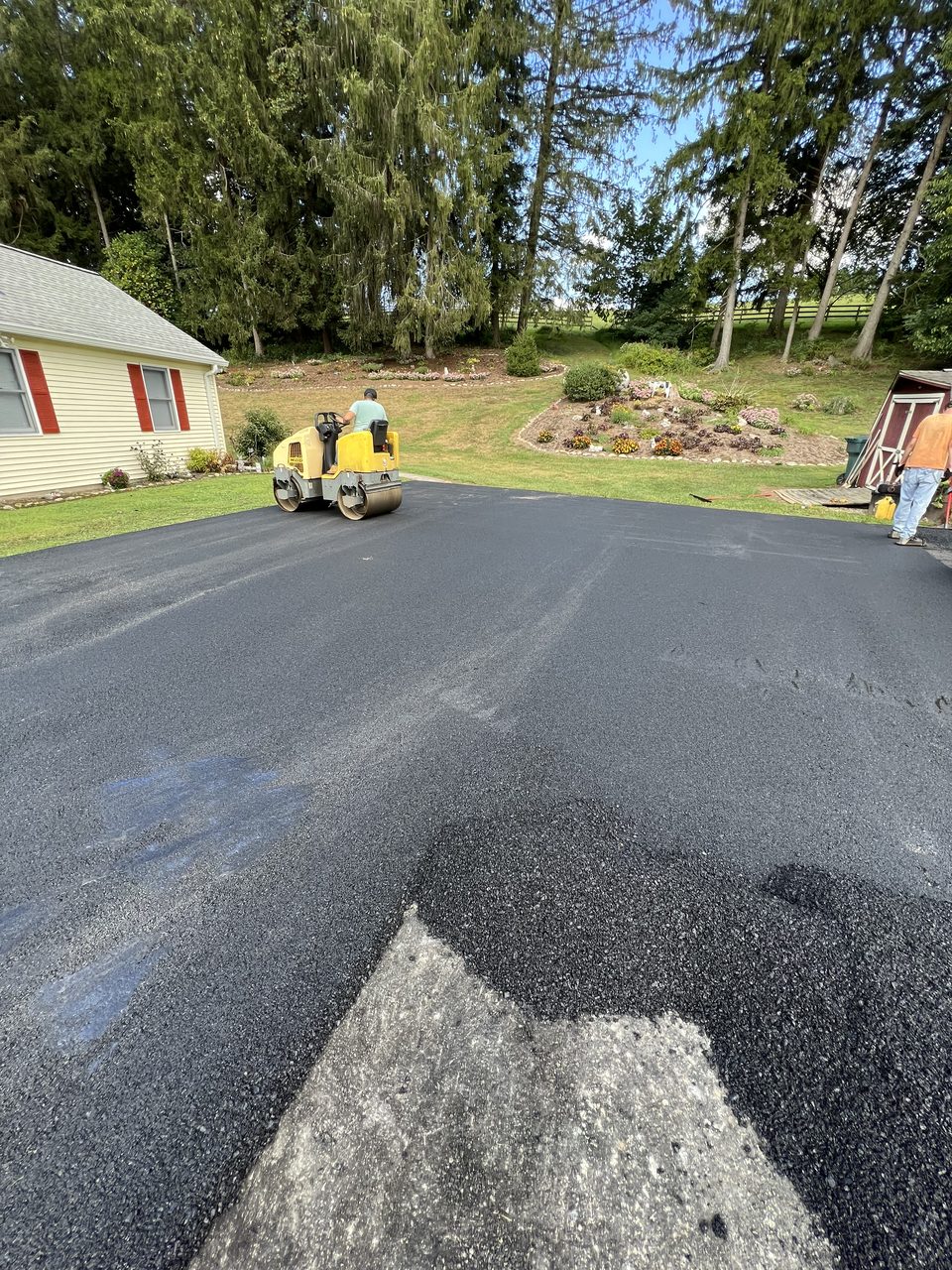
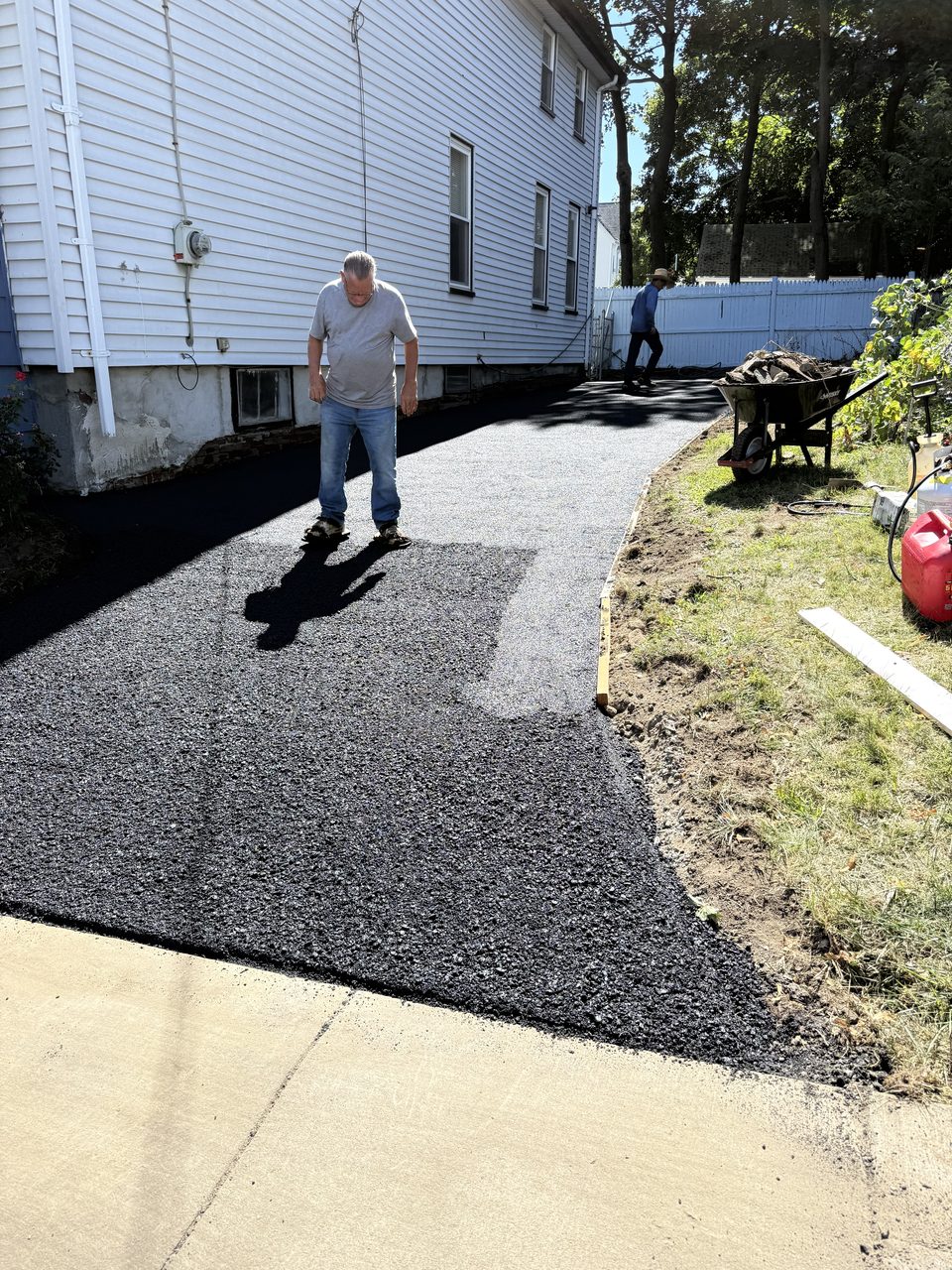
If you plan to pave eventually, a properly built gravel driveway is the first half of the job. The gravel base is what carries the load and handles frost; the asphalt is the surface on top.
When you're ready to pave, we check the existing gravel, fix any soft spots, regrade, compact, and pave right on top — which usually costs less than starting from dirt. Ask us about it when we come out for your estimate.
How we approach it
Here's the sequence from first call to final walkthrough:
Start to finish
Look at the problem
We walk the driveway, look at where water is coming from and where it's going, and check the existing gravel for soft spots.
Cut & shape
We cut out ruts and high spots and reshape the driveway so it sheds water to the sides instead of running down the middle.
Add crushed gravel
Fresh crushed gravel is brought in where it's needed and spread to an even depth across the driveway.
Compact
The gravel is compacted so it locks together into a firm surface that resists rutting and stays put in heavy rain.
Final check
We check the grade and drainage with you and talk through upkeep, or next steps if you're planning to pave.
Gravel Driveways & Grading in New Hampshire
Gravel Driveways & Grading questions
Should I get a gravel driveway or an asphalt driveway?
Gravel costs less up front and works well on long rural driveways, but it needs regrading and fresh material every so often. Asphalt costs more but is smoother, easier to plow, and needs less upkeep. Many people start with a well-built gravel driveway and pave it later.
Why does my gravel driveway keep washing out?
Almost always because water is running down the driveway instead of off it. The fix is to reshape the driveway with a crown or side pitch, deal with where the water is coming from, and use crushed gravel that locks together instead of loose stone.
Can you pave over my gravel driveway later?
Yes. If the gravel is solid and drains well, we can grade and compact it and pave directly on top. If there are soft spots, we fix those first.
How often does a gravel driveway need regrading?
It depends on traffic, slope, and how well it drains. A well-built gravel driveway might only need touch-ups every few years, while one with drainage problems will rut and pothole every spring until the drainage is fixed.
Need your gravel driveway fixed?
Free written estimates across New Hampshire and Northern Massachusetts. Tell us about your project and we'll get you a fair, no-pressure quote.